
Cereal Killer

Standard


 Honeycomb


I love breakfast cereal.

Oh sure, granola, Kashi. But really…I love the sugar cereals. Quisp, Frosted Flakes, Rice Crispies, Honeycomb. I’m a kid who grew up during the emergence of cereal as a breakfast staple. I still love watching those nutritionless pieces float to the top of the milk, leaving behind a sugary residue best drunk from the bowl like a Neanderthal.

But I don’t eat cereal anymore. I used to, as a late night snack, or a lazy substitute for dinner after a frustrating day. But a few years ago, I made the change to eating more healthfully.  I found other ways to deal with frustration and laziness. Because I just don’t eat much sugar, cereal lost its appeal. Any extra calories and sweets I wanted to spend were going to be devoted to some delicious dessert, not a bowl of cereal. There was no longer a place for cereal in my life.

So it was definitely a curious thing when one November afternoon I found myself with a large box of Honeycomb cereal with my order as I checked out at the grocery store. Oh it was no mistake. As I rushed to make my way to the checkstand, in a particularly frazzled state, I impulsively grabbed the box and dropped it my cart. Somewhere in my mind I heard the faintest voice saying “I’ll show them…”

While I am not sure who “them” was, I do know that this happened during an extremely rushed trip to the supermarket, in the middle of an impossible string of 16 hour workdays at my corporate job. A stressful time, without a day off in at least three weeks. No weekends. No exercise. No life. I had barely been to the gym in the three weeks prior, and I was living in a “fight or flight” state, existing primarily on a diet of coffee and adrenaline.

I sat down later that night to eat my Honeycomb with great anticipation—of what, I am not entirely clear. I ate deliberately, waiting for the power to rise within. Anxiously looking to the promise of the inevitable sugary satisfaction. But the joy wasn’t happening. So I did what any recovering sugar addict would do. I had another bowl. Waiting for the elation. The endorphins. The glory.

But, like Diana, I felt nothing.

Disappointed, I gave the box away to some a twenty-something power lifter who eats cereal as an appetizer.

While I was grateful that the cereal held no power over me, I was left to ponder the significance of all this. Beginning with the impulsive grabbing of the box of cereal off the shelf, and that quiet voice proclaiming, “I’ll show them,” I knew something was not right. Combined with my waiting for the power of the Honeycomb to kick in, this all had the stench of an old and ugly mindset coming to the surface.

Sometimes we assume that the return of old behaviors are the no more than the result of bad habits making an appearance during a difficult time. But really, that might only be part of the story.

Of course, eating the Honeycomb wasn’t the problem—it was what I expected to happen when I ate it. I needed to dig deeper. After all, I was clearly looking to find some kind of inner strength from a bowl of breakfast cereal. Further investigation revealed that the behavior was actually a symptom of a bigger problem. My subconscious was alerting my mind and my sinking spirit:

“Our girl is in trouble.”

And I was. Overworked and exhausted. I was falling apart. And with no defenses left, I reverted to old behaviors—behaviors that I used to find empowering—to try and save myself.

As a one-time recurrence, there wasn’t any harm done—it was just a bowl of breakfast cereal. Still, when we find ourselves in a situation where we look to old, disempowering habits to bring us back in line, we might just be looking at a desperate inner cry for help out of a tough circumstance. In order to ensure that the old behavior does not revive itself as a harmful—and ineffective—coping mechanism, we must take pause to learn something about ourselves. This opens up the opportunity to not only confront the real underlying issue, but also to recognize when such behavior is as much a symptom as a result.

We might worry that overanalyzing may take some of the joy out of a simple, harmless pleasure—again, it was just a bowl of cereal. But clearly I was not in this for the enjoyment. I was hoping for some kind of power. And that’s where the trouble lies. Maybe, if the old ways aren’t working, by taking a thoughtful, closer look, we are moving one step closer to extinguishing the behavior as a go-to solution. And that is empowering.

Maybe the next time you surprise yourself by falling back on on an old habit that you purposely got rid of prior—before you dismiss it as some crazy aberration, take a closer look see if reverting to an old behavior isn’t a way of sending yourself a message. It might just be your subconscious trying to help you change direction. It’s worth a listen. Even if that means becoming a cereal killer.

The Sunny Side of the Street

Standard

IMG_0530

On one of those gloomy days, with winter fast approaching, I found a spot in the park where there was a sliver of sun making its way through the clouds. I stood there for awhile, because on that chilly fall day—a day that felt more like winter than autumn—that moment reminded me that the sun eventually shows up. As much as I love the change of seasons, I need to see the sun sometimes.

When I take walks during my lunch hour, I often look out of my office window in downtown NYC, and look at the narrow streets below, scoping the area for a ray of sunshine peeking through the tall buildings. My response to “Where are you walking to?” is inevitably, “I’m going to walk until I find the sun.” Seeing the sun from my office window often proves to be a tease. When I get downstairs, the sun is nowhere to be found at ground level. So I have to go out in search of it. It often takes a long time before I find it, but when I do, I stop and I revel for just a moment. The sun gives me a warm hug, reminding me that it’s not going anywhere. Even when it’s hiding, it’s still there. Sometimes, we just have to look a little harder. I can do that.

But what about those days, sometimes several strung together—where the sun refuses to make an appearance through the gray? Those are tough times. We are left to rely only on faith that there will be sun…eventually.

Wait—are we still talking about the weather? What about the metaphorical gray days? How do we get past those? It’s easy to say that the “sun” will appear eventually. There are dozens of sayings like “darkest before the dawn,” “light at the end of the tunnel.” But sometimes, when you are in the midst of the gloom, it seems endless.

For me to get out of that gray funk, I find that I need a plan. An anti-gloom plan. A find-the-sun plan.

Over the years, I seem to have maybe accidentally developed a process that works for me. I expect this may be different for everyone, but I’ll share a few simple steps that help me out.

Step One: I cry about it. Okay, in all honestly, that really isn’t a step. It’s just something that happens. I’m not proud of it, but I’m not ashamed of it either. I look at those tears as a cue that I need to put a plan into action. Also, I try not to stay in the crying place too long. It’s fine as an opening to the conversation, but is not really useful beyond that in trying to move forward. What is your cue? Do you get extra tired? Do you walk away from everything? Do you eat a dozen cookies? (No judgment. I have tried all of these.) Just recognize it as a wake-up call to action.

Step Two: I go to my “Zen place.” Mentally, I mean. I accept the gray gloom as the place that I am right now. This does not mean that I am happy about it, but it does mean that I have come to terms with the fact that this is where I am at this moment in time. It is my way of giving myself permission to move forward.

I accept that I cannot see the sun right now. I remind myself that although not visible, the sun is still there. I also remind myself that I have been here before, and I have successfully escaped the gloom. Sometimes it just takes more work. I take a lot of deep breaths, and find a place to be grateful, even in the gray.

Step Three: I make a plan to find the sun. Whatever the “sun” is in that situation, I can find it eventually. I am strong. I have done this before. And I am going to find it.

When I say make a plan, I mean that quite literally. If there is a terrible work deadline, I make a plan for how I am going to meet it. If it is about getting over being sick, I make a plan for healing. If it is a relationship in a gloomy place, I look for a way to mend. Just like walking through the streets of downtown looking for the sun, I might need to alter my direction at some point—change the plan a little. And that’s okay.

While there are definitely parts of many of these situations that are beyond our control, there are likely more aspects within our control than we might have initially thought. I suggest we concentrate on those things. Certainly, we can determine how we choose to deal with the situation.

I also find it useful to look for ways to remain inspired. Reading books, listening to music, seeing a play, getting together with friends—even seeking help when you need it. Asking for help i relatively new for me—we don’t always have to go it alone. There are times we need outside resources like friends,mentors and coaches. Not having to know everything can be a relief!

I guess what it really amounts to is finding a new way to approach the gray, leaving yourself open to eventually finding the sunny side of the street.

“Gold dust at my feet
On the sunny side of the street”
-Louis Armstrong

On Love Letters and Omens

Standard

IMG_0394

On that crisp and drizzly fall morning I breathed in the fresh new air of the changing season, pondering poetry and reveling in the few moments of the day before the city was completely awake. Autumn is my favorite season, and the early morning is my time of day. A walk in the park is a ritual for my dog and me.

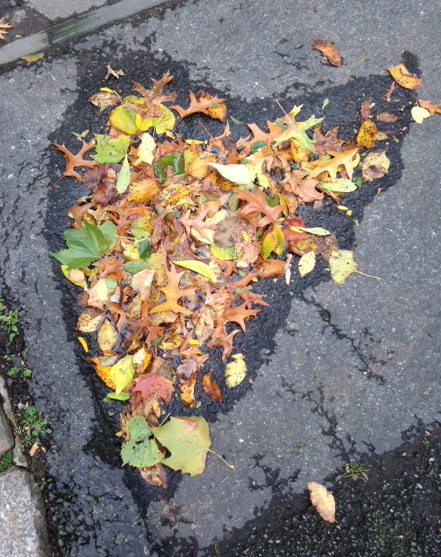
As we strolled, my mind wandered, and I came upon a group of freshly fallen leaves, matted to the ground by the cool morning moisture—into the shape of a heart. Now maybe it was just some random falling of the leaves, coupled with the wind, that caused the leaves to land in that shape. I could see piles of leaves all over the park. But this clump of leaves was in the shape of a heart. And all I could think was that my city had left me a love letter. After a difficult week at work, this reminded me that I am grateful for my life here, and this was clearly a way for the city to let me know that she loved me back. And that everything was going to be okay.

One of the most important messages in Paulo Coelho’s The Alchemist is,

“Learn to recognize omens, and follow them.”

We have all heard some version of this. “It’s a sign.” Or “The universe is trying to tell me something.”

This concept often has us thinking we must actively look for signs in the world. “Show me a sign!”

But if we read the sentence from The Alchemist more carefully, we see that that Paulo Coelho doesn’t say we should look for omens, rather we should “learn to recognize them.” This implies the omens are always there for us to learn from, but only become meaningful as omens when we recognize them as such.

What does that even mean? What if you can’t find a class anywhere in Omen Recognition 101?

I do believe that learning to acknowledge these signs from the universe is a lifelong process that can be cultivated. But it takes practice.

We must ask: What does an omen look like?

I am sure this is different for everyone. For me, omens often come with a feeling of randomness. Like that wild coincidence when you start running into various people from your past. Or when you hear about a particular book in three separate places in the same week. Or maybe an unexpected conversation with a stranger offers a new perspective.

Sometimes a sign will reveal itself in the form of an epiphany. Often not a new or original thought, an epiphany appears as an amazing realization, like the proverbial light bulb. The “AHA!” moment that can be powerful enough to change everything.

Or an omen can show itself in those instants when we are completely present—we are able to experience time as it happens, instead of in retrospect. And in those fleeting seconds we can observe the truth of the moment. During those times I am often overflowing with gratitude, and that feeling can serve as an affirmation that something is going right.

It all sounds so cosmic and lofty, but the truth is, these omens are there for us to receive all the time. We live in a world where we are often preoccupied with jobs, business, finances—everyday life. We busy ourselves every waking hour, living in that “fight or flight” mode, where it’s easy to feel that there is no time for things like omen-pondering. When we are in that mindset, there is just no more space for anything other than basic survival, as our bodies are actually chemically designed to keep us focused on survival in those situations. The adrenaline is pumping so that we may endure the chase, so it makes sense that we are unable to muster any recognition of omens left for us by the universe. Like the animal running on the treadmill, it’s often difficult to stop.

I am not suggesting that we have to give up our life and wander the globe in order to see the omens the universe has laid out for us. But I am suggesting that we take a moment each day to be still. To “reset” our minds and hearts so that the omens become available to us. Even if just for a moment, we need to find a way to remove ourselves from that adrenaline survival rush.

For me, I take my dog to that little park in the morning. I used to go there only once in awhile, but when I started to make that morning walk in the park part of my routine, something interesting happened. I started to breathe from the moment I entered the park. My typical brisk pace became a stroll, my mind let go of the workday ahead, and I automatically opened up to where I could ponder aimlessly as I walked. That’s where the practice part comes in. Finding those few moments of stillness allows you to open your heart and soul to seeing the signs as they present themselves.

And that’s when you realize that sometimes leaves just fall randomly in a pile. And sometimes they fall in the shape of a heart, and you are still enough to see that your city has sent you a love letter.

But Does It All Add Up?

Standard

  Math My mother, in her infinite patience, taught six-year-old me how to “borrow” in subtraction during the summer after second gradebecause I just didn’t get it. The idea that I just wasn’t good at math stayed with me for a long time.
As I got older, I realized that I can do math. My application of mathematical principles doesn’t exactly rival Albert Einstein’s legacy, but I do okay. I apply my understanding of math to figure out square footage, determine the size container I need to store the leftovers, and adjust my food macros so the percentages are correct in MyFitness Pal. On occasion, I even find myself solving for a missing variable. There’s no doubt that knowing some basic mathematics comes in handy, even in the presence of modern technology.

Math is essential when looking for answers to questions that are, in fact, measurable. In a world of uncertainty, math can provide us with a definitive answer. 2+2=4. We will always be able to draw that conclusion. Whether it’s apples, puppies or shots of tequila. Two plus two will always equal four.

But what about when we try to use math as a guide to help us draw conclusions where the numbers seem clear, but the answers are misleading? Is a lower score on a standardized test always indicative of lower intelligence? Could it be a result of a nervous test taker?

Or a simple Body Mass Index (BMI) calculation, which takes into account height and weight. What if a person carries a high percentage of muscle, causing them to weigh more? Certainly we wouldn’t want to draw a conclusion that they are obese.

In our desire to have a precise explanation for everything, I sometimes wonder if we haven’t become a bit overzealous in assigning numeric values to qualities that are, in reality, much more subjective. We use numbers to determine young vs. old, fit vs. unfit. But in these cases, isn’t math only a part of the story? The problem is that when we don’t consider all the variables, the quantitative answer often leads us to damaging qualitative conclusions.

When looking at fit vs. unfit—if we use BMI as a measurement, we don’t take into account body fat percentage. When looking at old vs. young, is it always appropriate to group people in categories such as “over 50” or “under 35”for everything?

Of course, numbers may serve as a guide. But where several factors may be involved in determining the ultimate mathematical answer, we need to examine how those influences might have affected our results—before arriving at a qualitative judgment.

In the case of standardized intelligence tests, if we use the numeric results as the only way to determine intelligence, we run the risk of not accounting for the many possibilities that may have influenced the score, such as poor test taking skills, language barrier, or illness.

If we use the number on the bathroom scale to determine whether we are thin enough, we face the possibility of striving for something that may actually not be healthy or realistic, since we are not including all the factors that go into determining that number, such as muscle mass/body fat.

Placing undue importance on these numbers can cause us to feel that we are too heavy, too unintelligent, or too old. Judging ourselves against a number that defines where we “should be” can be a dangerous game that leaves us feeling like we are less than enough.

Isn’t it possible that sometimes a number is just a number? And any value beyond that is largely just opinion?

Here’s an interesting experiment regarding age:

In 1981, psychologist Ellen Langer conducted an experiment with eight men in their 70s, in good health. at a converted monastery in New Hampshire. Before arriving, the men were assessed on measures as dexterity, grip strength, flexibility, hearing and vision, memory and cognition. Some had arthritis, some stooped over, some walked with canes.

Everything inside the monastery — including the books, music, television and the magazines were designed to recreate 1959. The men in the experimental group were told to inhabit 1959 — to make a psychological attempt to be the person they were 22 years ago. From the time they entered, they were treated as if they were younger. Each day, the men talked about 1950s artifacts and events in the present tense. There were no mirrors, no modern clothing, and no photos, with the exception of portraits of their younger selves

At the end of their five day stay, the men were tested again. They were suppler, showed greater manual dexterity and sat taller. Even their sight improved. Independent judges said they looked younger. Langer said the subjects “put their mind in an earlier time,” and their bodies played along.

I am not suggesting that we dismiss all numbers or calculations as uselesseven in some of the situations described, numbers may serve as guidelines. I am implying, however, that sometimes we need to look beyond the numerical value to find the real value of what we are hoping to learn from the results.

What are you allowing numbers to say about you? Take a moment to think about it. Because even though math can be amazing, sometimes those numbers just don’t add up.

“It would be possible to describe everything scientifically, but it would make no sense; it would be without meaning, as if you described a Beethoven symphony as a variation of wave pressure.” – Albert Einstein

The Cherry Danish Conundrum

Standard

cherry-danish

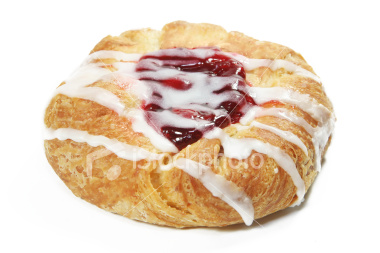
It was one of those crisp, sunny New York City mornings as my friend and I strolled along Broadway in the financial district. We were on a break from work, in search of the perfect late breakfast. The subject came around to oatmeal, fruit, and being healthy. She looked at me, eyebrows raised as she matter-of-factly proclaimed, “Sometimes, you just need a cherry danish!”

In a world overcome with talk about healthy eating, I was taken aback by her candor in admitting this aloud on a public street. I nodded. It was true. We talked about how we eat so healthy, work out, etc. We deserve it.

I started to think about all the things we only allow ourselves to have sometimes, because we need to earn them. We seem to do this especially with food and money. “When I finally lose those last 10 pounds, I am going to have that cherry danish!” “When I get my tax return, I am going to buy those expensive shoes!”

This left me thinking: Could we be further encouraging some of our less desirable habits by using them as a reward?

Perhaps the problem is that we have exalted indulgences like the cherry danish to lofty prize status—a rare, delectable treat to be enjoyed by only the most deserving. Noting that I have never done this with broccoli, I wondered what would happen if I lowered the status of the cherry danish to maybe something more along the lines of a green vegetable?
I closed my eyes and imagined a world where I could have cherry danish anytime I wanted. How did that feel?

In this imaginary world, people ate a cherry danish when, and only when, they felt like it. People weren’t thinking about whether they deserved this treat. They just ate it and enjoyed it. They didn’t overthink this. They didn’t give cherry danish any special value as a reward. It was just a simple, delightful little indulgence they could enjoy with coffee sometimes. Something held at a status somewhere above broccoli, but below rare, imported French pastry. The people in this imaginary place smiled a lot, because their thoughts were not filled with working toward the cherry danish prize. The idea of “value” (other than a simple pleasure) was not involved.

It seems there is a fine line between “desire” and “deserve.” Sometimes, waiting until we are enough—as in thin enough or rich enough—gives us a strange relationship with the goal we are working toward. If eating too many cherry danish is part of the reason we need to lose ten pounds, I can’t help but wonder if earning the right to eat a cherry danish might actually be counterproductive in our quest to control our cherry danish habit!

To be clear, I am in no way suggesting reckless cherry danish consumption for the masses. I am simply submitting that maybe—just maybe—we’ve got this all backwards. Maybe if we convince ourselves that we can have that little treat anytime we want, we will diminish its importance, and therefore the control it has over us. The difference between allowing an indulgence and deserving one suggests an element of worthiness unbecoming of eating a simple danish. When we give a simple treat reward value, we exalt it to a level that allows for a fair amount of control over how we behave. And even worse, our misguided importance of said indulgence may sometimes give us license to use it as a means of self-sabotage.

I know this can sound scary to those of us who struggle to change habits around areas in our lives where we see ourselves as overdoing it—food or spending, for example—but I think this is a concept worth exploring. The people in the imaginary world, a world where they ate cherry danish when they felt like it, made an uncomplicated decision that led to a simple enjoyment. They didn’t consider being deserving of the cherry danish. They didn’t tie it to any kind of value system. In fact, they didn’t even think about cherry danish until they wanted it.

How might life be different today if we begin by proclaiming ourselves cherry-danish-worthy?

Expect Residual Delays

Standard

The subway platform is packed with people. There was a broken switch, a fire on the tracks, police activity somewhere. The trains were not running earlier, and the mass of people crowding the platform is the aftermath. You hear the announcement, “After an earlier incident, the A trains are now running. Expect residual delays.”

Although frustrating to hear, it makes sense. The trains weren’t running for two hours. While the actual cause of the problem is now fixed, the trains are not yet back on schedule. There is a backlog. The trains are moving again, but it’s going to take a little more time before they are running smoothly. While I am the last person to praise New York City Transit for their iconic wisdom, there is definitely an important lesson in this MTA message.

The concept of expecting residual delays comes to mind whenever I am in the process of making some great change in my life. You know the feeling. You are determined. Today is the day. You have made a conscious decision. To start exercising. To eat healthier. To save money. You begin your journey to greatness doing everything right. You are a model of discipline.

When I am in that mode, I feel unstoppable. But I also feel impatient. I want to see results. If I am trying to lose weight, I want to look different now. If I am trying to save money, I want to see a difference today. Invariably, it’s taking far too long to notice a change.

This isn’t surprising. We are part of a society whose collective patience is rapidly dwindling. We wait for no one. Having lived through the age of rotary phones, dictionaries, encyclopedias, and phone booths, I can tell you that daily life has changed a lot. No more staying home waiting for a phone call. No more having to go get the dictionary, or look things up in the encyclopedia. Gone are the days of having to remember random details: What’s the name of that actor? That restaurant? A few short years ago, I might have spent hours trying to remember something like that. Now, I just need my computer. Or my phone.

Information that once took us weeks to retrieve is instantly available to us all the time. In fact, we expect nothing less than immediate gratification. And don’t get me wrong—as a nerd, and a lover of learning everything, Google and I are besties.

But eventually we have to face the inevitable: Some things are just not instant. Like changing lifestyles and trying to develop good habits. We try to make them instant, like losing weight with a magic pill, or the latest herbs. Or trying a purported fast and easy way to earn money online. We are easy prey for anyone promising a quick outcome.

The truth is, when we are looking to make dramatic transitions, it takes time. When we are looking to become “unglued” from behaviors we’ve had for years—or even decades—we might find that we experience little roadblocks along the way. Debris from our former habits or attitudes can sometimes temporarily slow our progress. Kind of like the A train, even though we are back on track, we are experiencing some residual delays.

The good news? The trains eventually get back on schedule, and if we view our setback as temporary, we will, too. We are on the right path for success. And, if we stay the course, the laws of physics dictate that we are going to get there.

But we are not Google. Our results are not always going to happen immediately. Sometimes we simply have to do it old school—we have to be patient. This means accepting ourselves exactly where we are right now is crucial, and that can be the hardest part. We need to find that mindset where we are actually grateful for the place we are in our quest.

How do we do that when we are trying to accomplish something that can seem daunting? Or we feel like we’ve tried so many times before? I usually start with that inner dialogue going on in my head. What if we change “I can’t believe it took me this long to start this!” to “I am so glad I am finally doing this for myself!” I am always surprised by how tweaking what I tell myself even slightly affects my whole outlook. This kind of gratitude helps lead to self acceptance, and also allows us to be open to any adjustments we might need to make along the way. If we aren’t kind to ourselves, then we are fighting ourselves the entire journey. Like being on a long car ride with someone you are arguing with.

We need to remind ourselves, that although we aren’t there yet, we’re doing what we need to do to get there. Even if it has taken us a long time to embark on our venture. Even though sometimes, we might experience residual delays.

photo-222

“If we are facing in the right direction, all we have to do is keep on walking.” –Proverb

You Say That Like It’s a Bad Thing

Standard


un.glue      verb \-ˈglü\  
To separate by or as if by dissolving an adhesive.

un·glued   adjective \-ˈglüd
Upset. Disordered

Synonyms
Befuddled; Bewildered; Shook up; Fouled up; Mixed up; Out of it; Woozy

Antonyms
Clear; Understanding

I don’t how we got from dissolving an adhesive to befuddled and bewildered.

Still, I can’t help but wonder…what if becoming unglued were actually a good thing? What if being glued is keeping us from being free to do other things? What if we really want to separate, like from something we don’t want to be stuck to anymore?

What if the outcome of “becoming unglued” is clarity, not confusion? Bedazzlement, not bewilderment? Fired up, not fouled up?

What if becoming unglued means…

Unsticking ourselves from self-imposed limitations? Dissolving those powerful adhesives composed of phrases like, “too late,” “too old” and “too tired? What if, with every drop of stubborn glue that is dissolved, we take one step closer to being the person we really want to be?

My own (continuing) journey to becoming unglued began with a single moment…when I imagined myself being something else. Still me—just striving to be a little bit better at my every day life. I took a sidestep and saw myself from a different angle. Only then could I even begin to imagine the possibilities.

Since that defining moment, I have made a conscious effort to be a little more daring. A little more vulnerable. Just a little bit. Every day. Let’s face it—the longer you’re glued, the more effort it takes! But it’s most definitely possible.

I don’t mean deserting your family, abandoning your friends, quitting your life. I am talking about a little bit of thoughtful and inspiring information, shared among cyberfriends. Each one looking toward becoming their best self. Every day. I am talking about following some of those dreams that have been itching to come to the surface.

Let’s start…here. Because–well–that’s where we have to start! Wherever you are. Whatever age. Whatever physical state you’re in. Whatever story about who you are and who you think you have to be and who you think you want to be. Let’s get inspired and become unglued.

IMG_1232

 “Wherever you are is the entry point.” – Kabir