The Sunny Side of the Street

Standard

IMG_0530

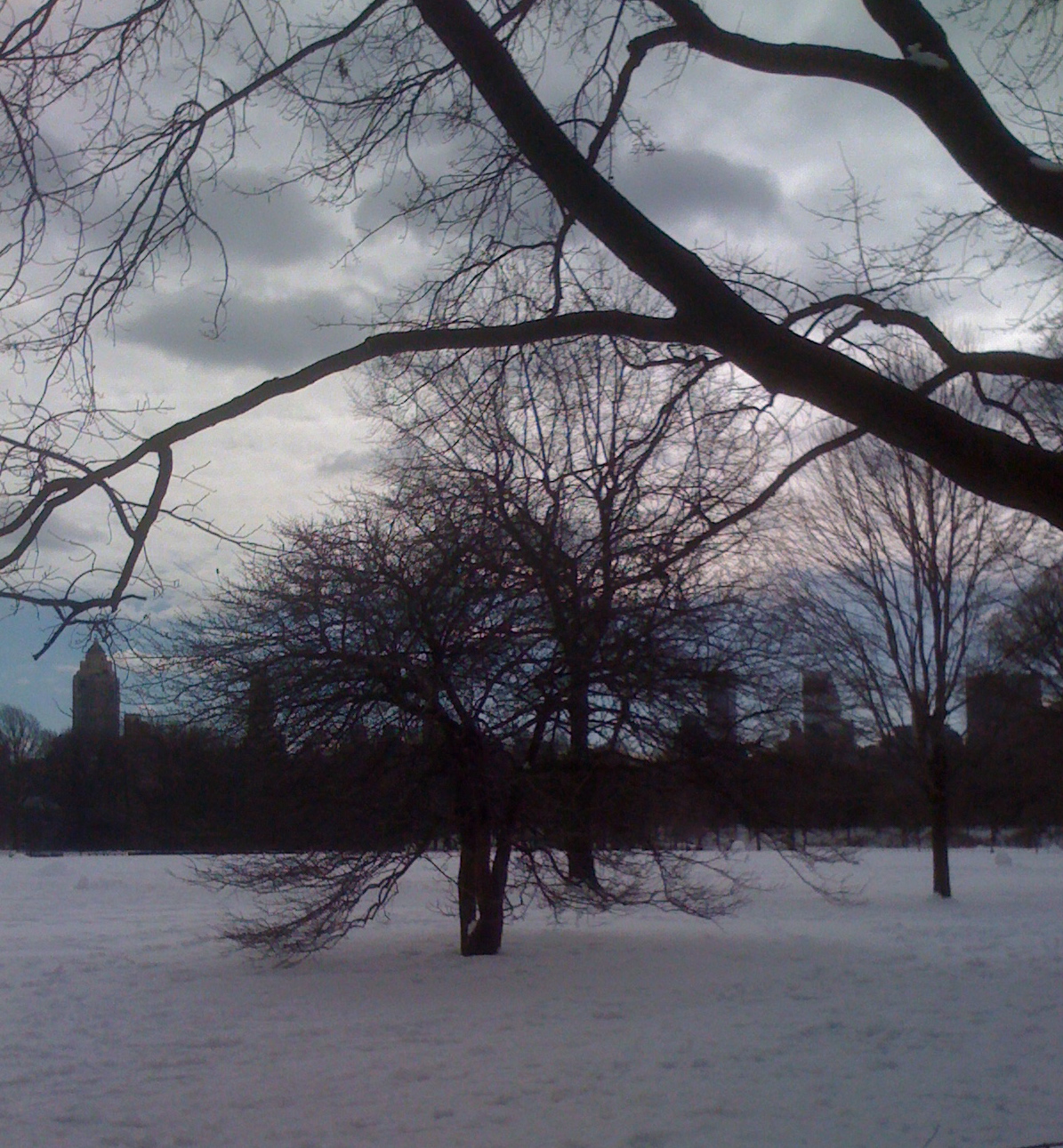
On one of those gloomy days, with winter fast approaching, I found a spot in the park where there was a sliver of sun making its way through the clouds. I stood there for awhile, because on that chilly fall day—a day that felt more like winter than autumn—that moment reminded me that the sun eventually shows up. As much as I love the change of seasons, I need to see the sun sometimes.

When I take walks during my lunch hour, I often look out of my office window in downtown NYC, and look at the narrow streets below, scoping the area for a ray of sunshine peeking through the tall buildings. My response to “Where are you walking to?” is inevitably, “I’m going to walk until I find the sun.” Seeing the sun from my office window often proves to be a tease. When I get downstairs, the sun is nowhere to be found at ground level. So I have to go out in search of it. It often takes a long time before I find it, but when I do, I stop and I revel for just a moment. The sun gives me a warm hug, reminding me that it’s not going anywhere. Even when it’s hiding, it’s still there. Sometimes, we just have to look a little harder. I can do that.

But what about those days, sometimes several strung together—where the sun refuses to make an appearance through the gray? Those are tough times. We are left to rely only on faith that there will be sun…eventually.

Wait—are we still talking about the weather? What about the metaphorical gray days? How do we get past those? It’s easy to say that the “sun” will appear eventually. There are dozens of sayings like “darkest before the dawn,” “light at the end of the tunnel.” But sometimes, when you are in the midst of the gloom, it seems endless.

For me to get out of that gray funk, I find that I need a plan. An anti-gloom plan. A find-the-sun plan.

Over the years, I seem to have maybe accidentally developed a process that works for me. I expect this may be different for everyone, but I’ll share a few simple steps that help me out.

Step One: I cry about it. Okay, in all honestly, that really isn’t a step. It’s just something that happens. I’m not proud of it, but I’m not ashamed of it either. I look at those tears as a cue that I need to put a plan into action. Also, I try not to stay in the crying place too long. It’s fine as an opening to the conversation, but is not really useful beyond that in trying to move forward. What is your cue? Do you get extra tired? Do you walk away from everything? Do you eat a dozen cookies? (No judgment. I have tried all of these.) Just recognize it as a wake-up call to action.

Step Two: I go to my “Zen place.” Mentally, I mean. I accept the gray gloom as the place that I am right now. This does not mean that I am happy about it, but it does mean that I have come to terms with the fact that this is where I am at this moment in time. It is my way of giving myself permission to move forward.

I accept that I cannot see the sun right now. I remind myself that although not visible, the sun is still there. I also remind myself that I have been here before, and I have successfully escaped the gloom. Sometimes it just takes more work. I take a lot of deep breaths, and find a place to be grateful, even in the gray.

Step Three: I make a plan to find the sun. Whatever the “sun” is in that situation, I can find it eventually. I am strong. I have done this before. And I am going to find it.

When I say make a plan, I mean that quite literally. If there is a terrible work deadline, I make a plan for how I am going to meet it. If it is about getting over being sick, I make a plan for healing. If it is a relationship in a gloomy place, I look for a way to mend. Just like walking through the streets of downtown looking for the sun, I might need to alter my direction at some point—change the plan a little. And that’s okay.

While there are definitely parts of many of these situations that are beyond our control, there are likely more aspects within our control than we might have initially thought. I suggest we concentrate on those things. Certainly, we can determine how we choose to deal with the situation.

I also find it useful to look for ways to remain inspired. Reading books, listening to music, seeing a play, getting together with friends—even seeking help when you need it. Asking for help i relatively new for me—we don’t always have to go it alone. There are times we need outside resources like friends,mentors and coaches. Not having to know everything can be a relief!

I guess what it really amounts to is finding a new way to approach the gray, leaving yourself open to eventually finding the sunny side of the street.

“Gold dust at my feet
On the sunny side of the street”
-Louis Armstrong
On Love Letters and Omens

Standard

IMG_0394

On that crisp and drizzly fall morning I breathed in the fresh new air of the changing season, pondering poetry and reveling in the few moments of the day before the city was completely awake. Autumn is my favorite season, and the early morning is my time of day. A walk in the park is a ritual for my dog and me.

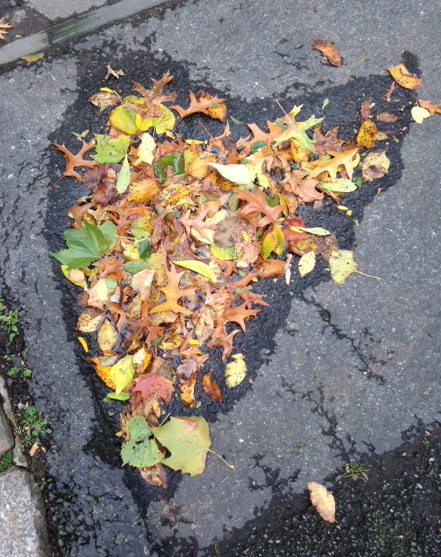
As we strolled, my mind wandered, and I came upon a group of freshly fallen leaves, matted to the ground by the cool morning moisture—into the shape of a heart. Now maybe it was just some random falling of the leaves, coupled with the wind, that caused the leaves to land in that shape. I could see piles of leaves all over the park. But this clump of leaves was in the shape of a heart. And all I could think was that my city had left me a love letter. After a difficult week at work, this reminded me that I am grateful for my life here, and this was clearly a way for the city to let me know that she loved me back. And that everything was going to be okay.

One of the most important messages in Paulo Coelho’s The Alchemist is,

“Learn to recognize omens, and follow them.”

We have all heard some version of this. “It’s a sign.” Or “The universe is trying to tell me something.”

This concept often has us thinking we must actively look for signs in the world. “Show me a sign!”

But if we read the sentence from The Alchemist more carefully, we see that that Paulo Coelho doesn’t say we should look for omens, rather we should “learn to recognize them.” This implies the omens are always there for us to learn from, but only become meaningful as omens when we recognize them as such.

What does that even mean? What if you can’t find a class anywhere in Omen Recognition 101?

I do believe that learning to acknowledge these signs from the universe is a lifelong process that can be cultivated. But it takes practice.

We must ask: What does an omen look like?

I am sure this is different for everyone. For me, omens often come with a feeling of randomness. Like that wild coincidence when you start running into various people from your past. Or when you hear about a particular book in three separate places in the same week. Or maybe an unexpected conversation with a stranger offers a new perspective.

Sometimes a sign will reveal itself in the form of an epiphany. Often not a new or original thought, an epiphany appears as an amazing realization, like the proverbial light bulb. The “AHA!” moment that can be powerful enough to change everything.

Or an omen can show itself in those instants when we are completely present—we are able to experience time as it happens, instead of in retrospect. And in those fleeting seconds we can observe the truth of the moment. During those times I am often overflowing with gratitude, and that feeling can serve as an affirmation that something is going right.

It all sounds so cosmic and lofty, but the truth is, these omens are there for us to receive all the time. We live in a world where we are often preoccupied with jobs, business, finances—everyday life. We busy ourselves every waking hour, living in that “fight or flight” mode, where it’s easy to feel that there is no time for things like omen-pondering. When we are in that mindset, there is just no more space for anything other than basic survival, as our bodies are actually chemically designed to keep us focused on survival in those situations. The adrenaline is pumping so that we may endure the chase, so it makes sense that we are unable to muster any recognition of omens left for us by the universe. Like the animal running on the treadmill, it’s often difficult to stop.

I am not suggesting that we have to give up our life and wander the globe in order to see the omens the universe has laid out for us. But I am suggesting that we take a moment each day to be still. To “reset” our minds and hearts so that the omens become available to us. Even if just for a moment, we need to find a way to remove ourselves from that adrenaline survival rush.

For me, I take my dog to that little park in the morning. I used to go there only once in awhile, but when I started to make that morning walk in the park part of my routine, something interesting happened. I started to breathe from the moment I entered the park. My typical brisk pace became a stroll, my mind let go of the workday ahead, and I automatically opened up to where I could ponder aimlessly as I walked. That’s where the practice part comes in. Finding those few moments of stillness allows you to open your heart and soul to seeing the signs as they present themselves.

And that’s when you realize that sometimes leaves just fall randomly in a pile. And sometimes they fall in the shape of a heart, and you are still enough to see that your city has sent you a love letter.

But Does It All Add Up?

Standard

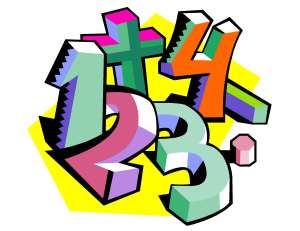
  Math My mother, in her infinite patience, taught six-year-old me how to “borrow” in subtraction during the summer after second gradebecause I just didn’t get it. The idea that I just wasn’t good at math stayed with me for a long time.

As I got older, I realized that I can do math. My application of mathematical principles doesn’t exactly rival Albert Einstein’s legacy, but I do okay. I apply my understanding of math to figure out square footage, determine the size container I need to store the leftovers, and adjust my food macros so the percentages are correct in MyFitness Pal. On occasion, I even find myself solving for a missing variable. There’s no doubt that knowing some basic mathematics comes in handy, even in the presence of modern technology.

Math is essential when looking for answers to questions that are, in fact, measurable. In a world of uncertainty, math can provide us with a definitive answer. 2+2=4. We will always be able to draw that conclusion. Whether it’s apples, puppies or shots of tequila. Two plus two will always equal four.

But what about when we try to use math as a guide to help us draw conclusions where the numbers seem clear, but the answers are misleading? Is a lower score on a standardized test always indicative of lower intelligence? Could it be a result of a nervous test taker?

Or a simple Body Mass Index (BMI) calculation, which takes into account height and weight. What if a person carries a high percentage of muscle, causing them to weigh more? Certainly we wouldn’t want to draw a conclusion that they are obese.

In our desire to have a precise explanation for everything, I sometimes wonder if we haven’t become a bit overzealous in assigning numeric values to qualities that are, in reality, much more subjective. We use numbers to determine young vs. old, fit vs. unfit. But in these cases, isn’t math only a part of the story? The problem is that when we don’t consider all the variables, the quantitative answer often leads us to damaging qualitative conclusions.

When looking at fit vs. unfit—if we use BMI as a measurement, we don’t take into account body fat percentage. When looking at old vs. young, is it always appropriate to group people in categories such as “over 50” or “under 35”for everything?

Of course, numbers may serve as a guide. But where several factors may be involved in determining the ultimate mathematical answer, we need to examine how those influences might have affected our results—before arriving at a qualitative judgment.

In the case of standardized intelligence tests, if we use the numeric results as the only way to determine intelligence, we run the risk of not accounting for the many possibilities that may have influenced the score, such as poor test taking skills, language barrier, or illness.

If we use the number on the bathroom scale to determine whether we are thin enough, we face the possibility of striving for something that may actually not be healthy or realistic, since we are not including all the factors that go into determining that number, such as muscle mass/body fat.

Placing undue importance on these numbers can cause us to feel that we are too heavy, too unintelligent, or too old. Judging ourselves against a number that defines where we “should be” can be a dangerous game that leaves us feeling like we are less than enough.

Isn’t it possible that sometimes a number is just a number? And any value beyond that is largely just opinion?

Here’s an interesting experiment regarding age:

In 1981, psychologist Ellen Langer conducted an experiment with eight men in their 70s, in good health. at a converted monastery in New Hampshire. Before arriving, the men were assessed on measures as dexterity, grip strength, flexibility, hearing and vision, memory and cognition. Some had arthritis, some stooped over, some walked with canes.

Everything inside the monastery — including the books, music, television and the magazines were designed to recreate 1959. The men in the experimental group were told to inhabit 1959 — to make a psychological attempt to be the person they were 22 years ago. From the time they entered, they were treated as if they were younger. Each day, the men talked about 1950s artifacts and events in the present tense. There were no mirrors, no modern clothing, and no photos, with the exception of portraits of their younger selves

At the end of their five day stay, the men were tested again. They were suppler, showed greater manual dexterity and sat taller. Even their sight improved. Independent judges said they looked younger. Langer said the subjects “put their mind in an earlier time,” and their bodies played along.

I am not suggesting that we dismiss all numbers or calculations as uselesseven in some of the situations described, numbers may serve as guidelines. I am implying, however, that sometimes we need to look beyond the numerical value to find the real value of what we are hoping to learn from the results.

What are you allowing numbers to say about you? Take a moment to think about it. Because even though math can be amazing, sometimes those numbers just don’t add up.

“It would be possible to describe everything scientifically, but it would make no sense; it would be without meaning, as if you described a Beethoven symphony as a variation of wave pressure.” – Albert Einstein